
An intensified DVAC probe into a multi-crore liquor scam, allegedly involving former DMK Minister V Senthil Balaji, has led to a suggestion to privatise retail liquor sales in Tamil Nadu. The investigation targets alleged collusion in TASMAC bar licences, transport tenders, and procurement, with the Madras High Court dismissing Balaji's anticipatory bail plea. The FIR details systemic corruption, significant revenue loss, and illicit fund generation, prompting political reactions.

Tamil Nadu Chief Minister C Joseph Vijay has ordered the closure of 717 retail liquor outlets across the state, responding to public demand, particularly from women and political parties.

The Tamil Nadu government has mandated stringent quality testing across all distilleries in the state to ensure alcohol content compliance. This decision follows public concern over the temporary ban and swift clearance of products from a private manufacturer, Enrica Enterprises, by the state's liquor monopoly, TASMAC. The move aims to address suspicions and ensure public safety regarding alcoholic beverages.

The Supreme Court on Friday paved the way for the reopening of State-owned liquor vends in Tamil Nadu by staying a Madras high court order which had ordered their closure for the time being on the ground that there was violation of guidelines, such as social distancing, meant to contain the COVID-19 pandemic. A bench comprising Justices L Nageswara Rao, S K Kaul and B R Gavai, in the proceedings held through video conferencing, stayed the May 8 order of the high court after taking note of the appeal of state government's firm, Tamil Nadu State Marketing Corporation (TASMAC), which sells alcoholic beverages in the state.

As a result, vehicular traffic and movement of people on roads saw a consequential increase in most parts of the state including rural regions, the State capital and key cities like Coimbatore, Madurai, and Tiruchirappalli.

Tamil Nadu electricity minister was arrested under the Prevention of Money Laundering Act (PMLA), official sources said, making him the first minister in the M K Stalin-led government to face such an action from a central agency.
'Both the AIADMK and DMK are promising prohibition, but where is the road map? Jayalalithaa is not giving a blueprint for her phased prohibition and Karunanidhi is not talking about a draft bill for the same. This is nothing but empty election rhetoric.'
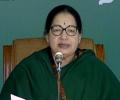
Seeking to turn the tables on the opposition which is promising prohibition if voted to power, CM Jayalalithaa assured a dry law in Tamil Nadu in a staggered manner.
The Dravida Munnetra Kazhagam might have been pushed into a corner to come up with a prohibition policy of its own, if only to create the right atmosphere for talking about an Opposition coalition in the state, says N Sathiya Moorthy
